

What the Numbers Really Mean About Obesity in the US
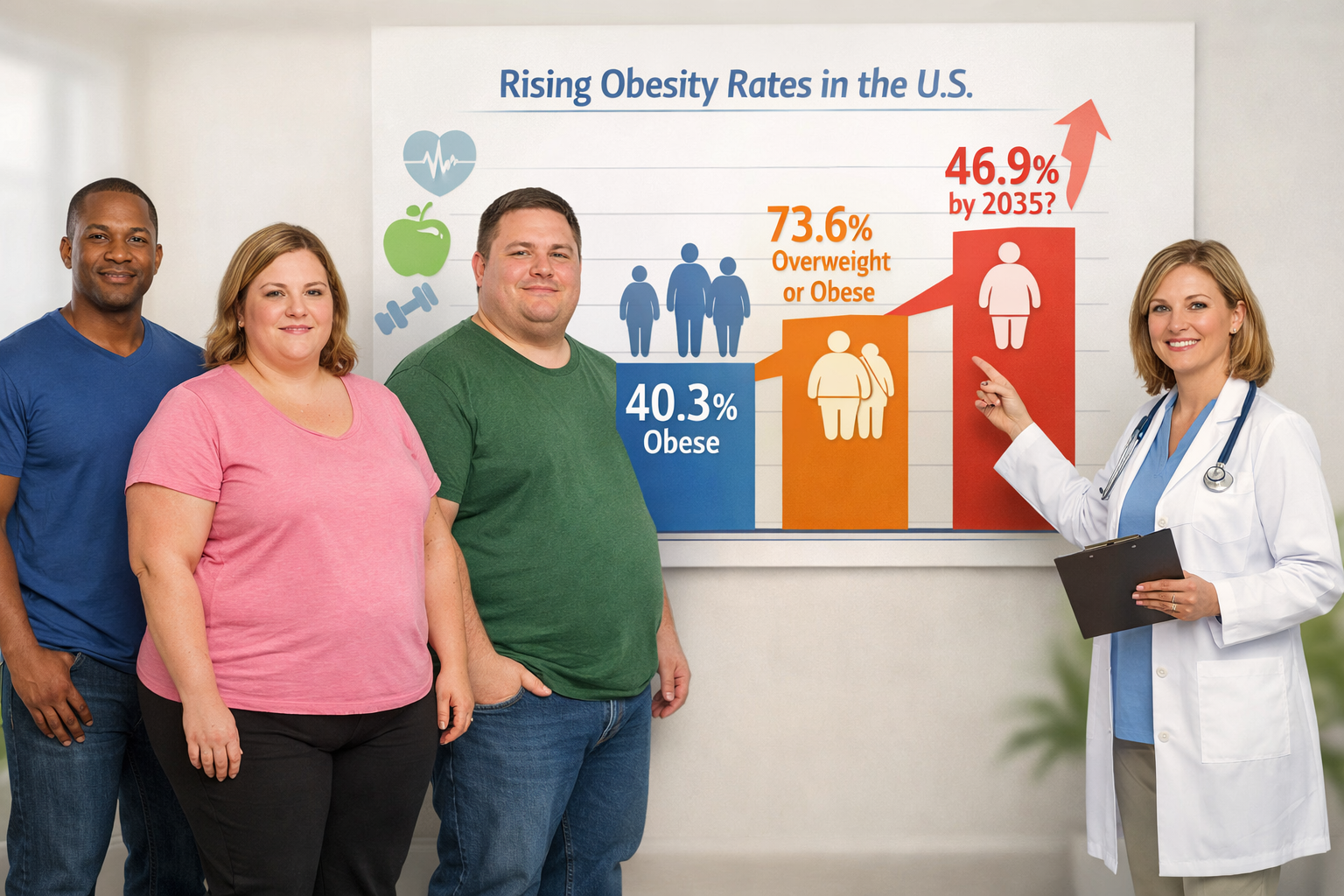
Obesity is now one of the biggest health problems in the US, and the numbers make it clear. According to the CDC’s most recent data from 2021 to 2023, 40.3% of U.S. adults are obese, which means their Body Mass Index (BMI) is 30 or higher. This isn’t just a number; it means that millions of people are more likely to have serious health problems like heart disease, diabetes, high blood pressure, and stroke.
People often hear that “about 70% of Americans are obese,” but this isn’t true. The 70% number is actually for adults who are either overweight or obese. According to data from 2017 to 2018, 73.6% of adults in the U.S. had a BMI of 25 or higher, which means they were either overweight or obese. Being overweight is not the same as being obese, but it still raises the risk of long-term health problems.
Why the Rise in Obesity Rates Is a Big Problem
What worries me more is how things will be in the future. A study published in JAMA in 2026 says that by 2035, 46.9% of people in the U.S. could be obese. If nothing changes, this means that almost half of all adults may be obese in the next ten years. This rise is linked to a bad diet, not enough exercise, sitting for long periods of time, stress, and easy access to processed foods.
The healthcare system is also under a lot of stress because so many people are obese. Families and the country have to pay more for medical care because more people need long-term treatment for chronic diseases. The good news is that you can avoid getting fat. Eating more fruits and vegetables, drinking less sugary drinks, staying active, and getting enough sleep are all small things you can do every day that can make a big difference.
People can act quickly when they understand these numbers. Obesity is not just a personal problem; it is a public health problem that needs to be brought to people’s attention, taught about, and changed in simple ways to stop the trend.