

What You Should Know About the Risk of Blood Clots with Combined Hormonal Birth Control Pills
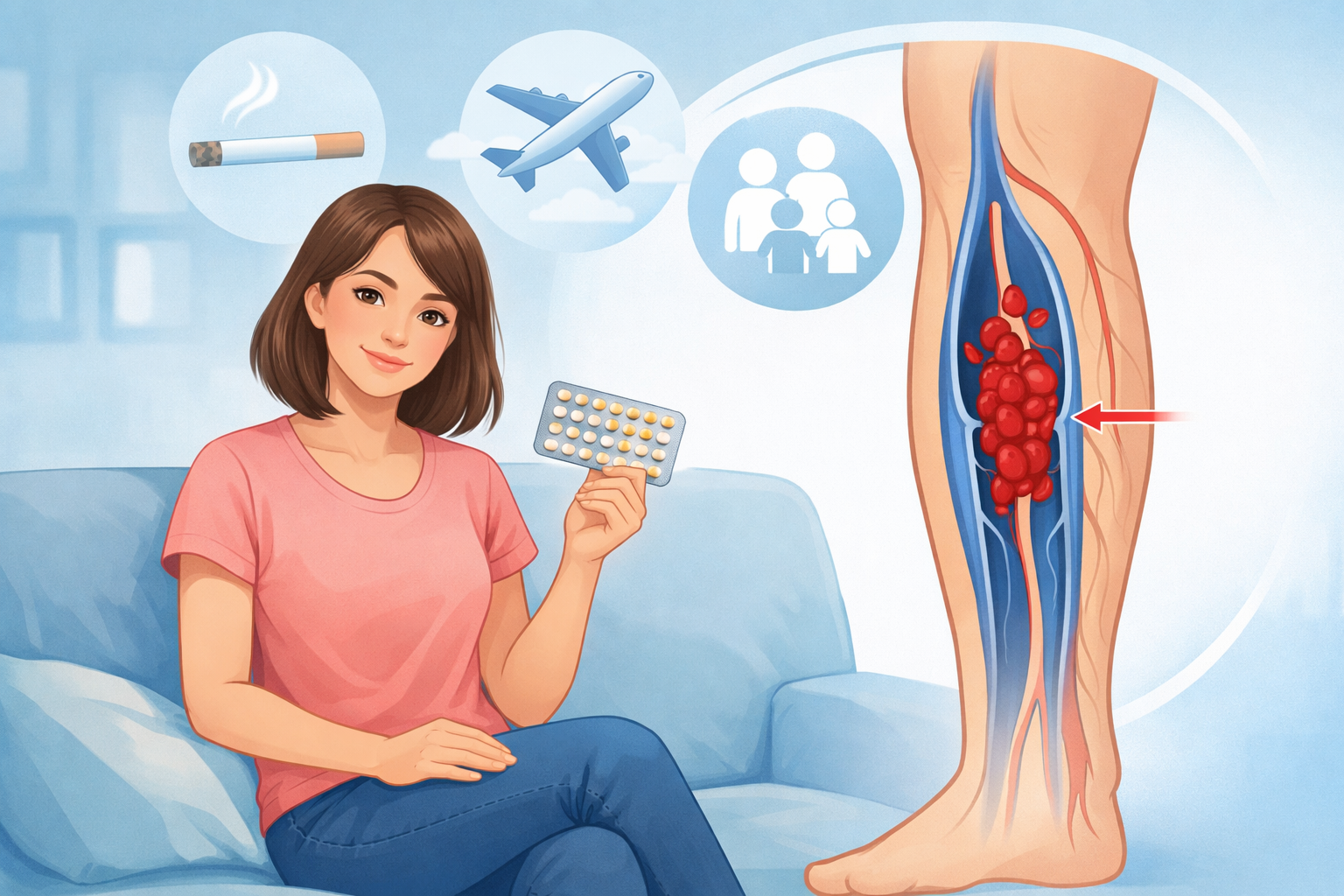
Women often use combined hormonal birth control pills to avoid getting pregnant. Estrogen and progestin are the two hormones that make them up. These hormones work together to stop ovulation and keep the menstrual cycle regular. These pills are safe and work for most women. But it’s important to know that they can slightly raise the risk of blood clots, especially deep vein thrombosis (DVT), which usually happens in the leg.
Why Estrogen Can Make Blood Clots More Likely
Combined birth control pills have estrogen in them, which can make blood clot more easily. Women who take these pills are more likely to get blood clots than women who don’t use hormonal birth control. But the risk is still very low. Research shows that between 3 and 9 out of every 10,000 women who take combined pills each year may get a blood clot. About 1 to 5 women out of every 10,000 who don’t take these pills get blood clots each year, on the other hand.
There are some things that can make this risk even higher. One of the biggest ones is smoking, especially for women over 35. A family history of blood clots, being overweight, and some medical conditions can also make the risk higher. Long flights or long periods of sitting can make things worse because not moving around makes blood flow slower in the legs, which raises the risk of DVT.
Leg pain, swelling, warmth, and redness are common signs of DVT. These symptoms usually happen in one leg. If you see these signs, get medical help right away.
In short, most women can safely take combined hormonal birth control pills, but knowing the risks can help you make better choices. Before starting any birth control method, you should always talk to a doctor or nurse about your own risk factors.