

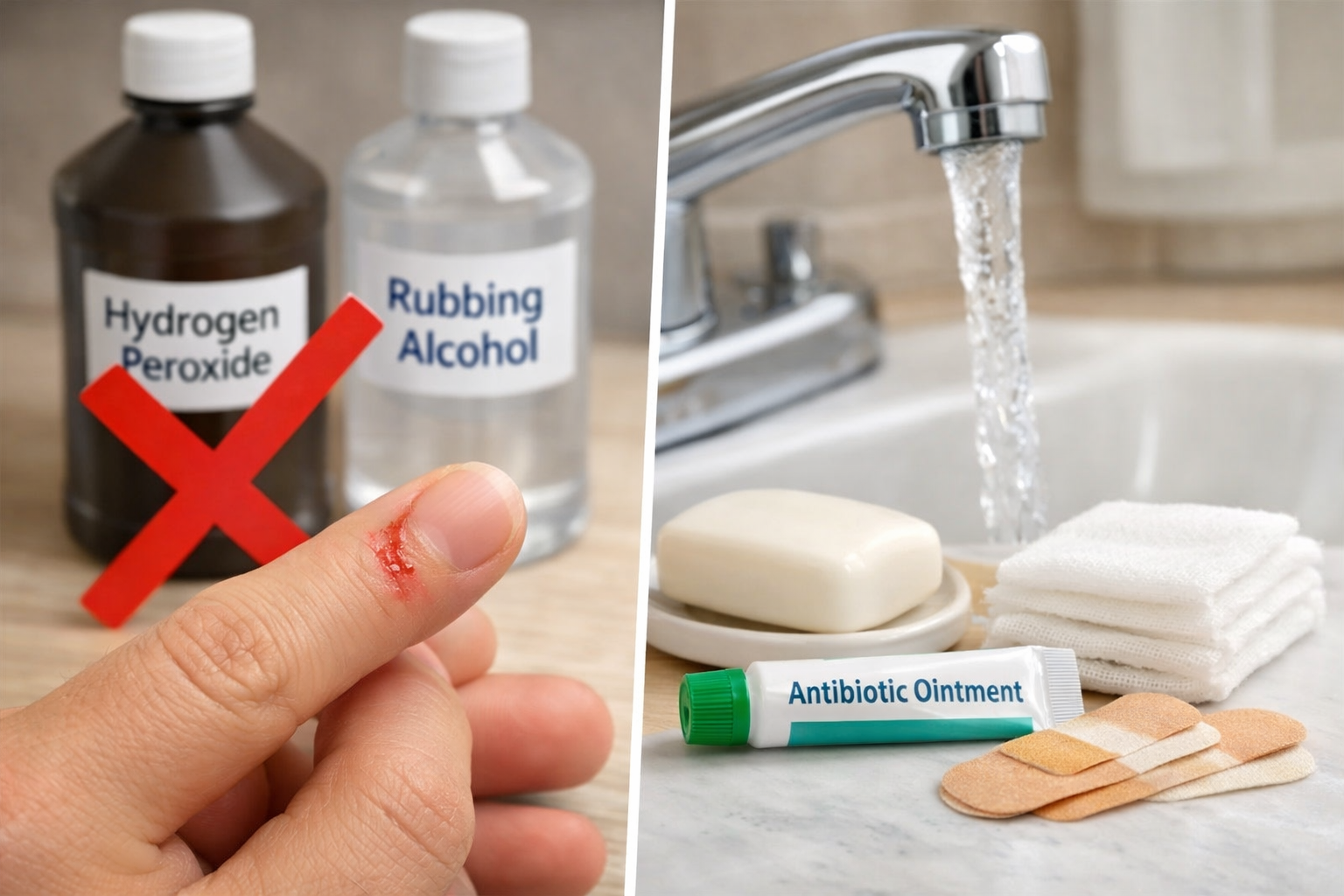
A lot of people still think that the best way to avoid getting an infection is to pour hydrogen peroxide or rubbing alcohol on a fresh cut. You might have even grown up feeling that sharp pain and thinking, “It’s working.” But the truth is surprising. Putting hydrogen peroxide or rubbing alcohol on a cut can hurt healthy tissue and slow down the healing process.
If you want your wounds to heal faster and leave fewer scars, you need to know why these things aren’t the best choice for basic first aid.
Why rubbing alcohol and hydrogen peroxide can hurt a cut
Rubbing alcohol and hydrogen peroxide are both very strong antiseptics. Their purpose is to kill germs. That sounds helpful, but they don’t just kill bad bacteria. They also hurt healthy skin cells that your body needs to heal the wound.
You might see bubbles when you pour hydrogen peroxide on a cut. It makes those bubbles when it comes into contact with blood and tissue. A lot of people think that the bubbling means the wound is being cleaned well. In fact, it can hurt the new cells that are trying to grow and heal the cut. This can make the wound heal more slowly and make scarring more likely.
Rubbing alcohol works the same way. It kills bacteria right away and dries out the skin. But it can also make the wound hurt more, irritate it, and hurt the tissue underneath. Your body needs more time to heal when healthy tissue is hurt. This can make the wound hurt more and take longer to heal.
Doctors and first aid experts now say that cleaning small cuts should be done more gently. The goal is to clean the wound without hurting the skin around it.
How to Clean and Heal a Small Cut the Right Way
The best way to treat most small cuts and scrapes is simple. First, wash your hands with soap and water. After that, gently rinse the cut under clean, running water. This helps get rid of dirt and debris without hurting healthy tissue.
You can use mild soap around the area, but don’t get soap directly inside the wound. Gently pat the area dry with a clean towel after you clean it.
If you have some, put on a thin layer of antibiotic ointment next. This can help keep the wound moist and stop it from getting infected. A cut heals faster when it is slightly moist than when it is completely dry.
Put a clean bandage over the cut. Change the bandage every day, or sooner if it gets wet or dirty. Look for signs of infection like redness, swelling, warmth, pus, or pain that gets worse. If you have any of these symptoms, you should see a doctor.
In short, hydrogen peroxide and rubbing alcohol may seem like good first aid options, but they can actually slow down the healing process by hurting healthy skin cells. For small cuts, all you usually need is to clean them gently with water and take care of them properly. Picking the right method can speed up the healing process and lower the risk of infection or scarring.