


Heart Bypass Without a Heart-Lung Machine May Improve Survival Rates
Heart bypass surgery is one of the most common ways to treat severe heart disease. This surgery is done by doctors when the arteries that bring blood to the heart get blocked. Surgeons usually stop the heart during the surgery and use a heart-lung machine to keep blood and oxygen moving through the body. But a newer method called “off-pump heart bypass surgery” lets surgeons work on the heart while it is still beating.
Studies show that bypass surgery without the heart-lung machine can cause fewer problems and deaths around the time of surgery. A lot of people are interested in this method because it could make recovery safer for a lot of patients.
What is heart bypass surgery without a pump?
Medically, heart bypass surgery is called “Coronary Artery Bypass Grafting” or CABG. The point of this surgery is to make a new way for blood to get around blocked arteries in the heart. Surgeons usually take a healthy blood vessel from the chest, arm, or leg and connect it to the heart so blood can flow around the blockage.
Surgeons use a tool called the “Heart-Lung Machine” in the traditional way. This machine does the work of the heart and lungs for a short time. While the surgeon stops the heart to do the surgery, it pumps blood and adds oxygen to it.
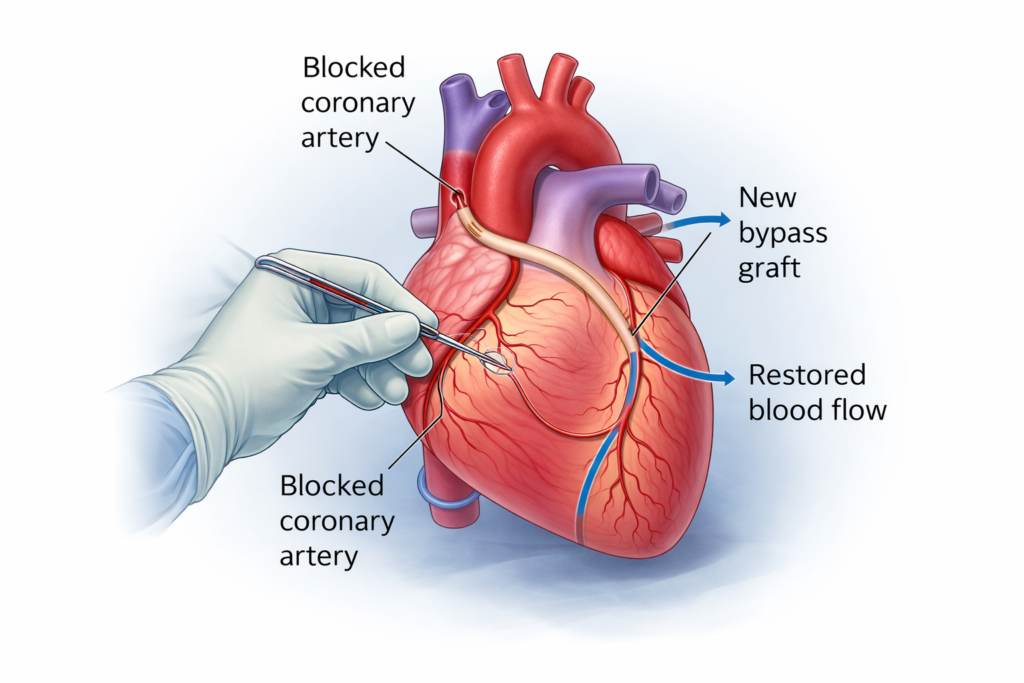
Surgery that doesn’t use a pump works differently. With this method, the surgeon does the bypass while the heart is still beating. The surgeon is working on a small part of the heart that is held still by special tools. This lets the doctor connect the new blood vessel without stopping the heart.
The heart-lung machine isn’t needed because the heart keeps beating. This can lower some of the risks that come with the machine.
Why Not Using the Heart-Lung Machine Might Lower Complications
Millions of lives have been saved by the heart-lung machine, and it is still used a lot. But it can sometimes have side effects because blood flows through fake tubes and pumps that are outside of the body. This process might cause inflammation or have an effect on different organs.
Research indicates that off-pump surgery may mitigate various complications that can occur during or shortly after bypass surgery. These are:
- Lower chance of having a stroke
- Less likely to bleed heavily
- Less need for blood transfusions
- Less stress on the kidneys
- Less time spent in the intensive care unit
Another good thing is that some patients heal faster because their bodies are less stressed during surgery. This method may be especially helpful for older people or people with other health issues.
But off-pump surgery is not the best choice for all patients. Because the heart is still beating, the procedure can be hard to do. Surgeons need special training and experience to do it safely. In some complicated cases, the heart-lung machine may still work better.
Because of this, heart doctors carefully look at each patient before deciding on the best way to do surgery. The decision is based on things like how many blocked arteries the patient has, how old they are, and how healthy they are overall.
The Future of Heart Bypass Surgery
As medical technology gets better, heart bypass surgery gets better too. Doctors are using off-pump techniques to lower the number of problems and raise the survival rates for many patients. Hospitals all over the world are looking into which patients get the most out of this method.
Bypass surgery can save the lives of people who have serious blockages in their heart arteries. The main goal of both the traditional method and the off-pump technique is the same: restore healthy blood flow to the heart and improve quality of life.
Before having bypass surgery, patients should always talk to their heart surgeon about all of their options. Knowing about the different methods can help them choose the best treatment and recovery plan for them.