

Taking out the fallopian tubes during pelvic surgery may lower the risk of ovarian cancer.
A lot of women have pelvic surgery for different health reasons. The surgery might be for fibroids, cysts, endometriosis, or other problems. According to a new medical study, taking out the fallopian tubes during these kinds of surgeries may lower the risk of getting ovarian cancer later in life.
Doctors are paying more attention to this method because ovarian cancer is often hard to find in its early stages. Doctors may be able to lower the risk of this cancer developing by taking out the fallopian tubes during another planned pelvic surgery.
Why the Fallopian Tubes Are Important in Ovarian Cancer
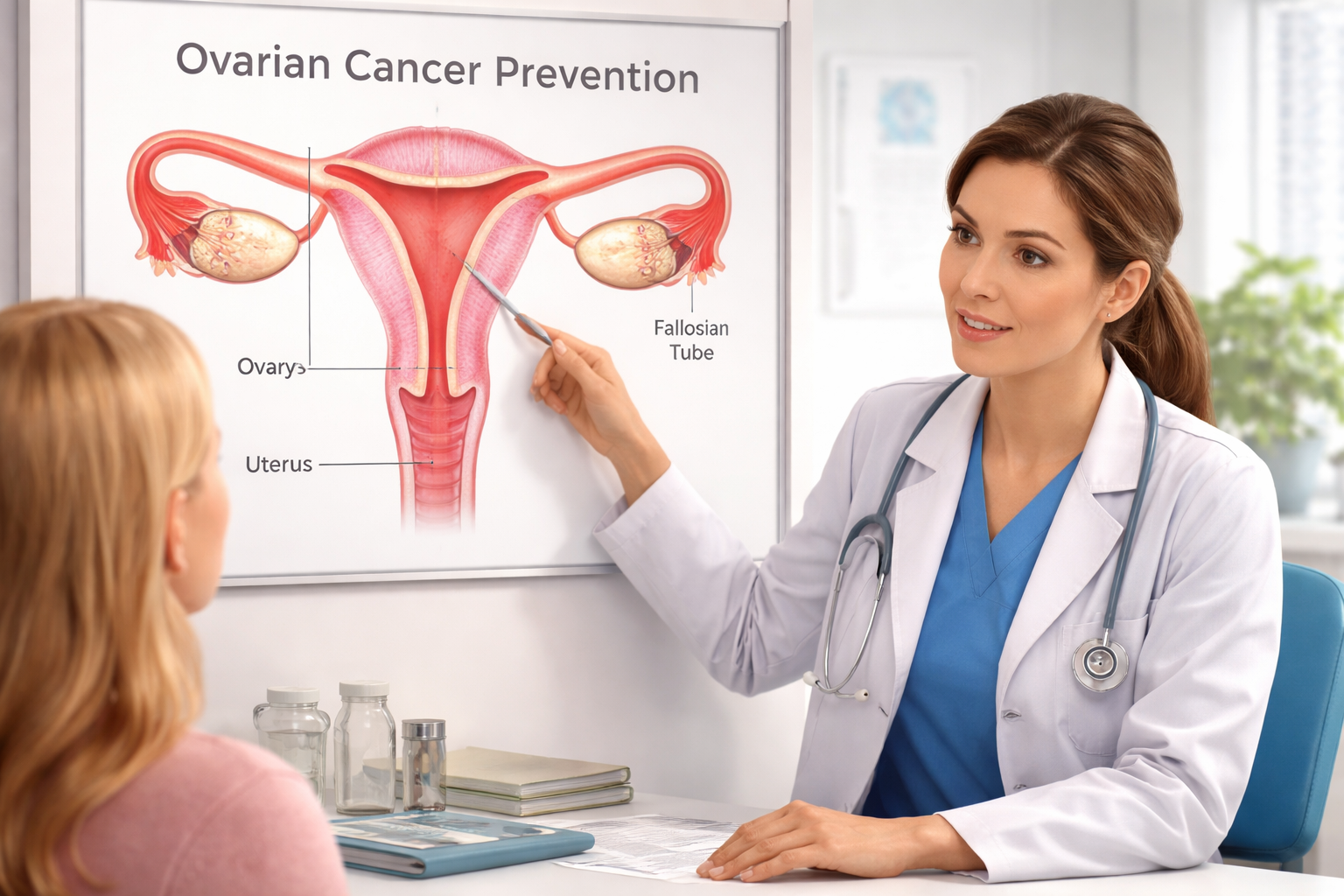
For a long time, doctors thought that ovarian cancer mostly started in the ovaries. But new research shows that a lot of cases may actually start in the fallopian tubes. These tubes link the ovaries to the uterus and help move eggs during ovulation.
Researchers have discovered that some early cancer cells can grow in the fallopian tubes and then move to the ovaries. Doctors are now paying more attention to the fallopian tubes when trying to stop ovarian cancer because of this discovery.
If a woman is already having surgery on her pelvis for another medical reason, taking out the fallopian tubes at the same time may lower her risk of getting cancer in the future. Some people call this procedure “opportunistic salpingectomy.” It just means taking out the fallopian tubes during a surgery that is already planned.
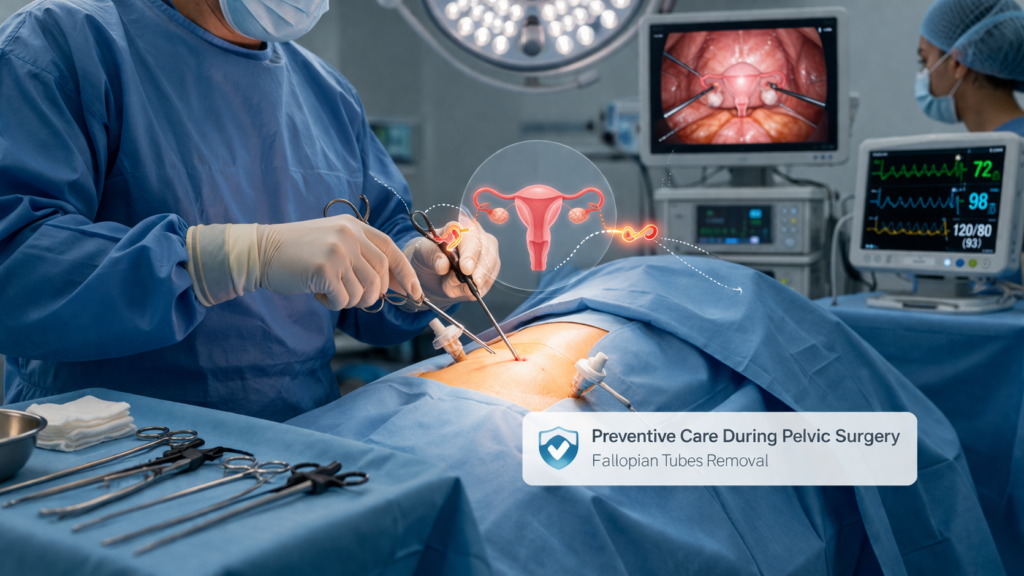
Research shows that this small extra step can help. Removing the fallopian tubes usually doesn’t cause early menopause or big hormonal problems because they aren’t needed to make hormones.
But removing the fallopian tubes will stop future pregnancies naturally because the eggs won’t be able to get to the uterus. This is why doctors usually only recommend it for women who don’t want to have more kids.
When doctors might suggest this option
Women who are already going to have pelvic surgery may talk to their doctors about having their fallopian tubes removed. Hysterectomy, treatment for ovarian cysts, or surgery for endometriosis are some examples.
Since the surgeon is already working in the pelvic area, taking out the fallopian tubes usually doesn’t take much longer. In a lot of cases, it doesn’t even make the recovery time much longer.
Medical groups in a number of countries are now telling doctors to talk to their patients about this option. The point is to give women a chance to lower their risk of getting ovarian cancer in the future.
Still, you should always think carefully before making this choice. There are risks with every surgery, and each woman’s health is different. Before suggesting the procedure, a doctor will usually look at things like the patient’s age, family history of cancer, and plans for future fertility.
Women who have a lot of ovarian cancer or genetic conditions in their families may already be told to take stronger steps to avoid getting the disease. For some people, taking out the fallopian tubes during another surgery could be a simple way to stop something from happening.
In the end, being aware is important. Knowing how the fallopian tubes and ovarian cancer are related may help more women make better health decisions with their doctors.
More research is still being done, but early results show that this preventive step could lower the risk of ovarian cancer and protect women’s health in the long run.