

Is Yogurt Really Good for Your Gut? Here’s What You Should Know
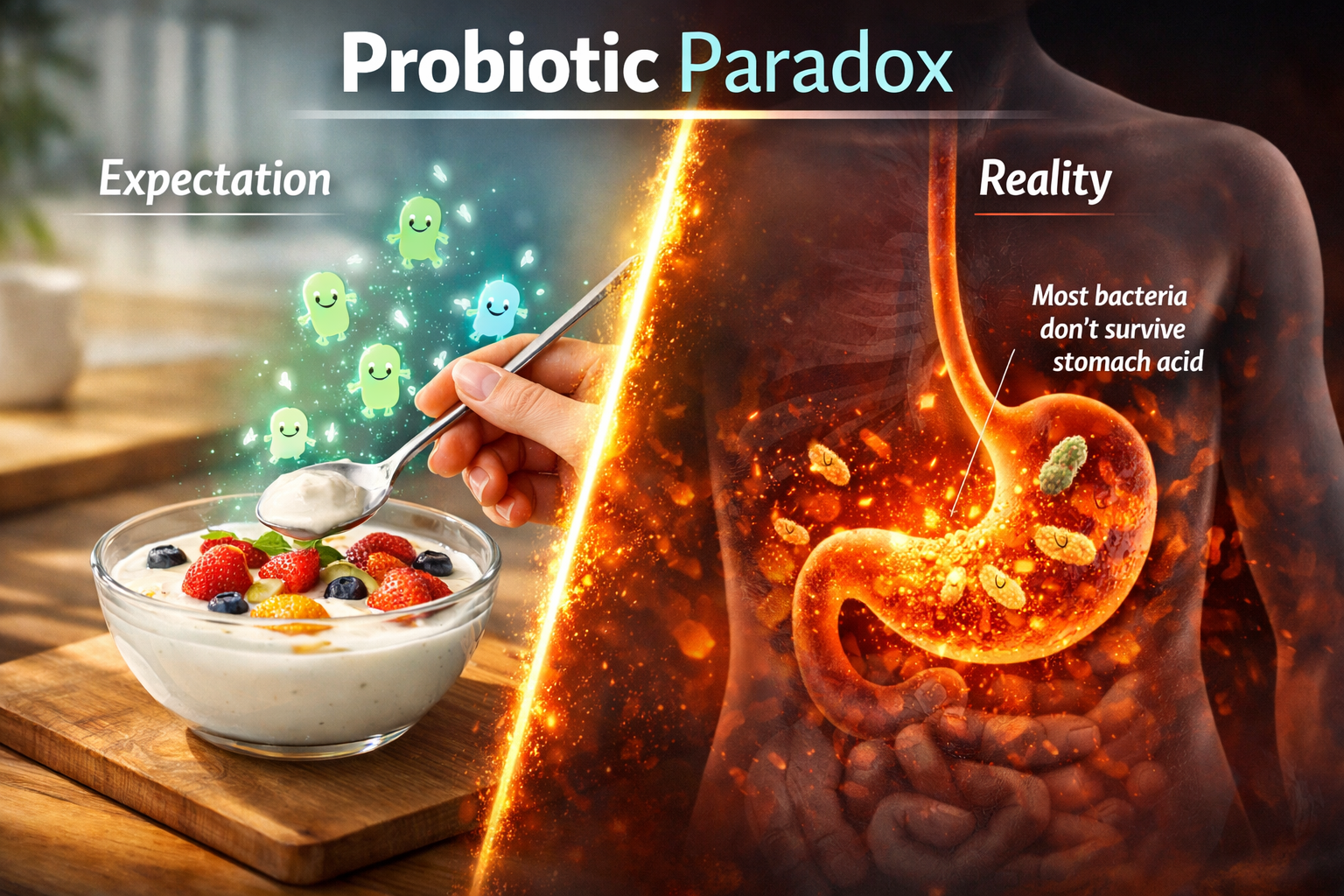
The Probiotic Paradox
You probably feel good about yourself when you wake up in the morning and eat yogurt because you’ve been told it’s the best food for a healthy gut. We don’t often stop to think about whether this health habit is really working because it’s so ingrained in our culture. We think of our digestive system as a nice garden where these store-bought cultures will just move in and grow.
But the truth is much more aggressive. Your digestive system is not a gentle path; it is a tough chemical gauntlet that kills foreign invaders before they can settle. When you eat regular yogurt, you send a small, weak group of microbes into a place that has been specifically designed to kill them. Most of these “friendly bacteria” die long before they get to where they are going.
This is what we call the “Probiotic Paradox.” Most of the time, the live cultures in these foods don’t make it through the journey. It is a strategic failure in our daily lives. To really help your gut, you need to know why common probiotic advice is often just a “drop in the ocean” and how to change your diet to include foods that have a better chance of helping.
The Battery Acid Barrier: Why Yogurt Bacteria Are Dead When They Get There
The main reason your morning yogurt isn’t working for you is because the stomach is such a harsh place. Your stomach keeps a very high level of acidity to help with digestion and keep germs away. This environment is meant to kill most microbes, and the strains found in commercial dairy are especially weak. Your stomach is like acid from a battery. Before it gets to the small intestine, most, if not all, of the bacteria in the yogurt will be dead.
The biological benefit is almost gone right away because the microbes in yogurt can’t handle this “battery acid” environment. You pay for digestive support, but if the bacteria die before they get to the small intestine, they can’t colonize your gut. This means that commercial yogurt is a very bad way to get live cultures to people.
The Math of Microbes: Why Millions Are Not Enough to Pass
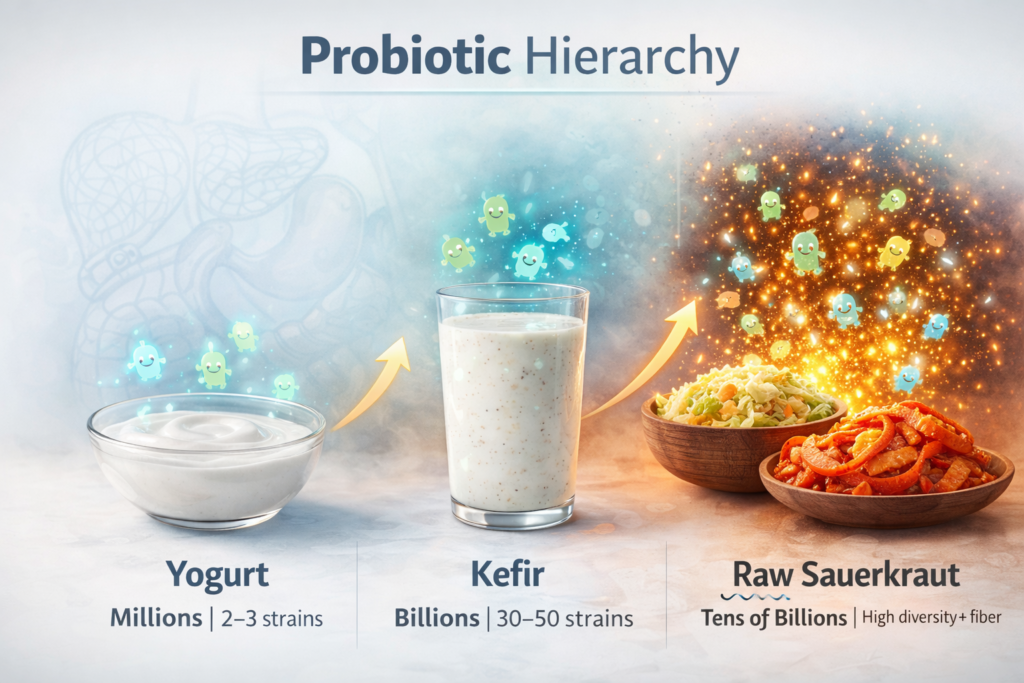
In addition to the issue of survival, there is the problem of size. A probiotic source must have a lot of different types and numbers of bacteria in order to affect the complex ecosystem of the human digestive system. This test doesn’t work with regular yogurt. Most store-bought brands only have two or three types of microbes, which add up to a few million bacteria.
“A few million” may sound like a lot on a label, but in the context of the whole digestive system, it doesn’t mean much. If you take these small amounts of bacteria, it’s like pouring a glass of water into the ocean and expecting the water level to change a lot. The gut landscape is so big that these small changes don’t really change anything about your digestion, and your “millions” of bacteria are basically invisible.
The Sugar Trap: How Eating Healthy Foods Can Make Yeast Grow
The list of ingredients in yogurt often makes the habit even more ironic. Many companies add sugar to store-bought yogurt to make it taste better for the general public. This makes things worse because the “health food” you think is helping you is actually hurting you.
This added sugar doesn’t help your gut; instead, it feeds yeast, Candida, and other “bad” bacteria. Eating yogurt with sugar in it is likely making the problems you were trying to fix worse, like fungal overgrowth. This changes the product from a probiotic supplement to a growth medium for harmful microbes, which could make your gut health worse.
The Kefir Upgrade: Increasing Diversity and Life
Kefir is a huge improvement over yogurt if you want to stick with a dairy-based probiotic. Kefir has a much more complex microbial profile than yogurt, which makes it better for gut colonization and survival.
- Diversity: Kefir has 30 to 50 different types of microbes, while yogurt only has 2 or 3.
- Quantity: It goes from a few million bacteria to a billion bacteria.
- Good Yeast: Kefir has “good yeast” that helps the body fight off bad yeast and Candida, unlike yogurt.
- Resilience: Kefir microbes are much more likely to survive the stomach’s harsh acids.
The Best: Why Raw Sauerkraut and Kimchi Are the Best
When it comes to probiotics, raw, fermented vegetables like sauerkraut and kimchi are the best. These foods have a level of microbial support that makes yogurt look like a fake. They don’t just add more bacteria; they give you a “complete package” of health benefits.There are tens of billions of microbes in sauerkraut and kimchi. That also includes the lactic acid, phytonutrients, and fiber.
To get these benefits, the vegetables must be raw and not cooked, because heat kills the live microbes. These vegetables have tens of billions of microbes in them when eaten raw, which is a lot more than the millions in yogurt or even the billions in kefir. These microbes, along with the lactic acid and phytonutrients in the vegetables, can also easily get past the stomach acids and into your small intestine, where they are most needed.
The “Probiotic Hierarchy” shows that not all fermented foods are the same. Yogurt is the most popular choice, but it has the fewest microbes, is not very diverse, and is easy to break down by stomach acid. By focusing on kefir, or even better, raw sauerkraut and kimchi, you make sure that you are getting tens of billions of strong, diverse microbes into your body instead of just a “drop in the ocean.”
Before you eat, think about this: Are you just pouring a glass of water into the sea, or are you finally giving your gut the large, varied microbes it needs to live and grow?