

How to Lower High Triglycerides Naturally and Protect Your Health
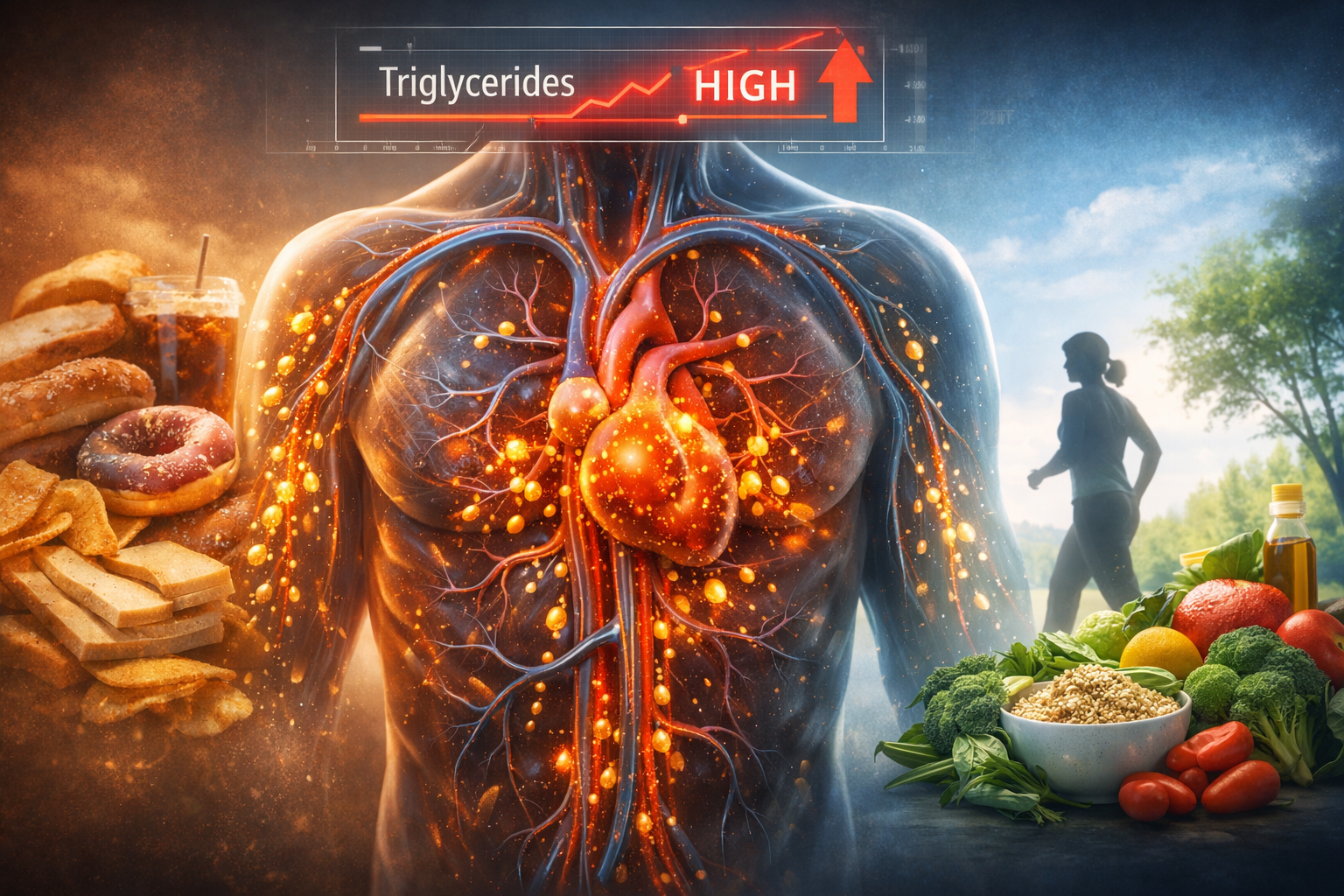
You see it when you look over your most recent blood work: a bright red flag next to “Triglycerides.” Your provider might have skipped over it, leaving you with a high number and no explanation. You can’t help but wonder what these molecules are really doing in your veins. If it’s not just the fat you ate for dinner, where did it come from? The first step to taking charge of your metabolic health is to understand this number.
Your body’s “liquid leftovers”: how to store energy you don’t use
Triglycerides are a kind of fat that is in your blood, but they don’t start out as “fat” like you might think. When you eat more energy than your body needs right away, it doesn’t just get rid of the extra. It changes that energy into a form that can be stored instead. Extra energy that your body didn’t need.
Think of this process as your body putting away food it doesn’t need. It effectively collects those extra calories and stores them in your bloodstream as liquid fat. They are meant to be a backup power source, but when the “fridge” is always full, the leftovers start to move around too much.
The Carb-to-Fat Pipeline and the Sugar Paradox
You probably think of the butter on your toast or the marbled steak you had for dinner when you see “fat in the blood.” But the truth about biology is often the opposite of what you think. Sugar and refined carbs are what really raise your triglycerides, not the fat on your plate.
White bread, sugary drinks, and processed snacks are the main things that cause this. When you eat these, your body starts a process that turns the sugars and starches into triglycerides right away. Many people are surprised by this paradox: you can eat a low-fat diet and still have dangerously high blood fat if your meals are high in processed carbs.
The Health Crystal Ball: Looking Ahead to Your Metabolic Future
High triglyceride levels are not just a number; they are a “crystal ball” that shows how healthy you will be in the future. There is a strong link between these levels and serious diseases like heart disease, fatty liver, and insulin resistance.
Most importantly, triglycerides are an early warning sign for the whole body. These levels can go up in your blood years before a doctor would ever say you have diabetes. They let you see a health crisis coming while you can still change what happens. Keep in mind that high triglycerides are one of the first signs of heart disease and diabetes.
The Path to Reversal: Moving with Purpose and Building Muscle
The good news is that your triglyceride levels change a lot based on how you move and what you eat. You can get rid of the “liquid leftovers” in your body by focusing on these four things:
- Eating less sugary and processed foods: This stops your body from getting the raw materials it needs to make triglycerides.
- Eating whole, unprocessed foods: Move toward foods that give you stable, usable energy instead of spikes that store energy.
- Moving your body strategically (especially after meals): This is a great way to boost your metabolism. It tells your body to use the energy from your meal right away, getting rid of those “liquid leftovers” before they can be stored away.
- Building muscle: Muscle tissue is active in your body and helps you burn triglycerides for energy. It acts like a permanent furnace for extra blood fat.
A high lab result isn’t a sentence; it’s a chance to live longer. Having high triglycerides is a chance to act early, giving you a chance to stop heart disease or diabetes from getting worse. You are choosing to change the story of your health before things get worse by listening to this quiet message. What is the first thing you will do today to make your path to long-term health easier?