

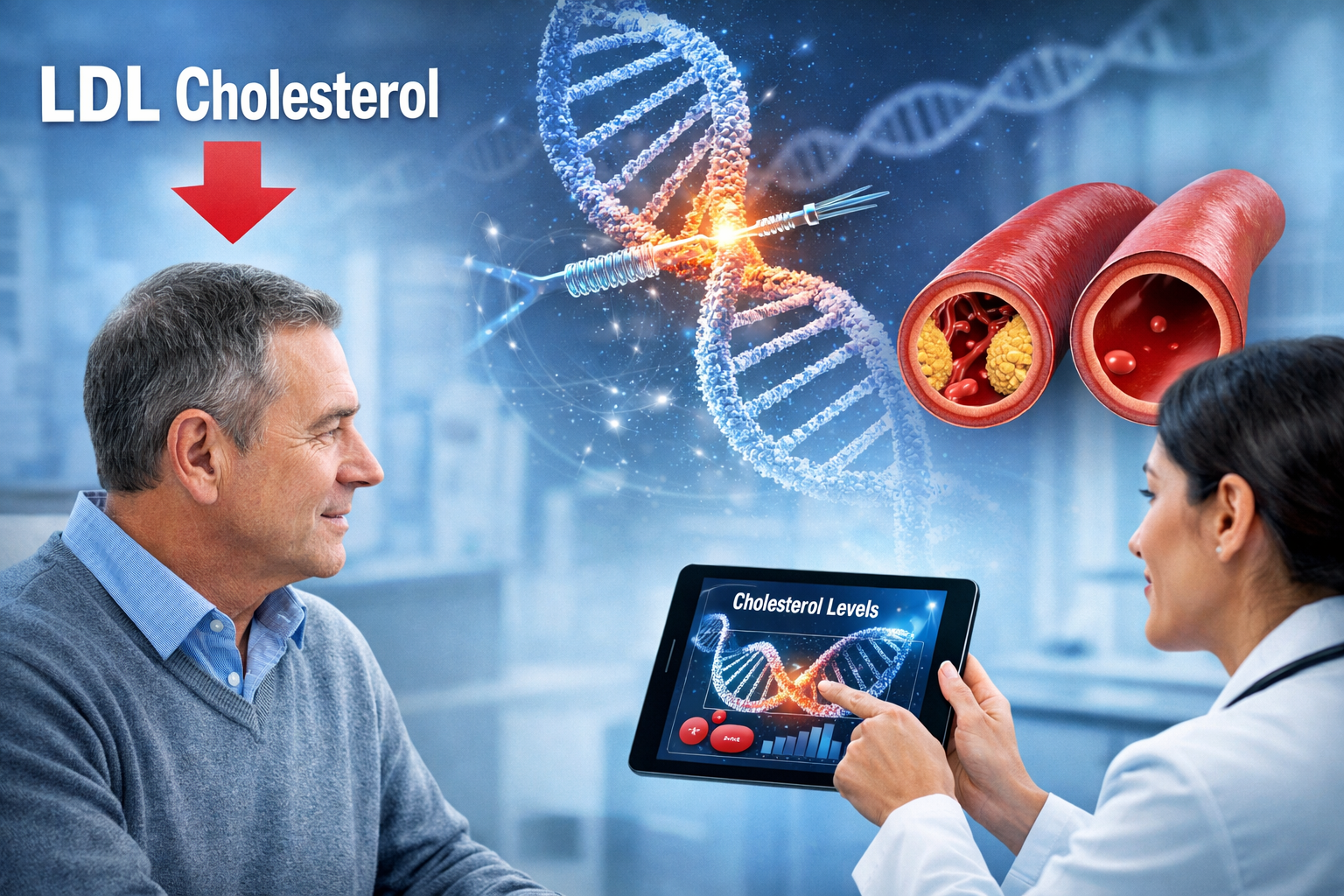
Editing genes with CRISPR just once may lower LDL cholesterol for years.
Having high cholesterol is one of the biggest things that can lead to heart disease. Many people take pills every day to keep their cholesterol levels in check, especially low-density lipoprotein (LDL) cholesterol, which is often called “bad cholesterol.” But new research shows that a single treatment with CRISPR gene editing may lower LDL cholesterol for a long time. In the future, this new way of doing things could change how we treat heart disease.
How CRISPR Gene Editing Lowers LDL Cholesterol
Scientists can use CRISPR to make very specific changes to DNA. It has already been used in studies of blood disorders and uncommon genetic diseases. Researchers are now testing it to see if it can lower high LDL cholesterol.
The treatment works on a gene in the liver called PCSK9. This gene has a big say in how much LDL cholesterol is in the blood. When PCSK9 is active, it makes it harder for the liver to get rid of bad cholesterol in the blood. The liver can naturally get rid of more LDL cholesterol by changing or turning off this gene.
In early clinical trials, a single CRISPR-based treatment brought down LDL cholesterol levels by a lot in people with very high cholesterol. Some people saw their LDL levels drop by 40% to 60%. Even more exciting, the decrease lasted for months and may last for years because the gene edit is permanent. You don’t have to take this every day like you do with statins or other cholesterol-lowering drugs. For some patients, one gene-editing treatment could replace the need for medication for the rest of their lives.
What This Means for Heart Disease and the Future
High LDL cholesterol makes it more likely that you will have a heart attack, stroke, or blocked arteries. Familial hypercholesterolemia is a genetic disorder that causes very high cholesterol levels. These kinds of conditions can be especially dangerous. Gene editing could give people who can’t control their cholesterol despite diet, exercise, and medicine a new chance.
The treatment is meant to be given as a single injection, which may make people more likely to stick with it. A lot of people forget to take their cholesterol medicine every day. You might not have to remember to take pills every day with CRISPR gene therapy.
But this treatment is still being studied in its early stages. Researchers are carefully looking into how safe it is and what effects it will have in the long run. Doctors need to make sure that gene editing doesn’t have any bad side effects because it changes DNA for good. So far, the early results look good, but more studies with more people and over a longer period of time are needed.
If CRISPR therapy for high LDL cholesterol is shown to be safe and work, it could be a big step forward in heart disease medicine. It could lower the risk of heart disease in the long term and save millions of lives around the world.
A one-time CRISPR gene edit that lowers bad cholesterol for years could change the way we take care of our hearts. Even though it’s not widely available yet, the future of cholesterol treatment may soon move from daily pills to one long-term solution.