

How to Tell the Difference Between a Migraine and a Tension Headache
Headaches happen a lot, but not all of them are the same. Migraines and tension headaches are two of the most common types. Knowing the difference can help you deal with pain better and know when to get medical help.
Migraine and tension headaches are different in important ways.
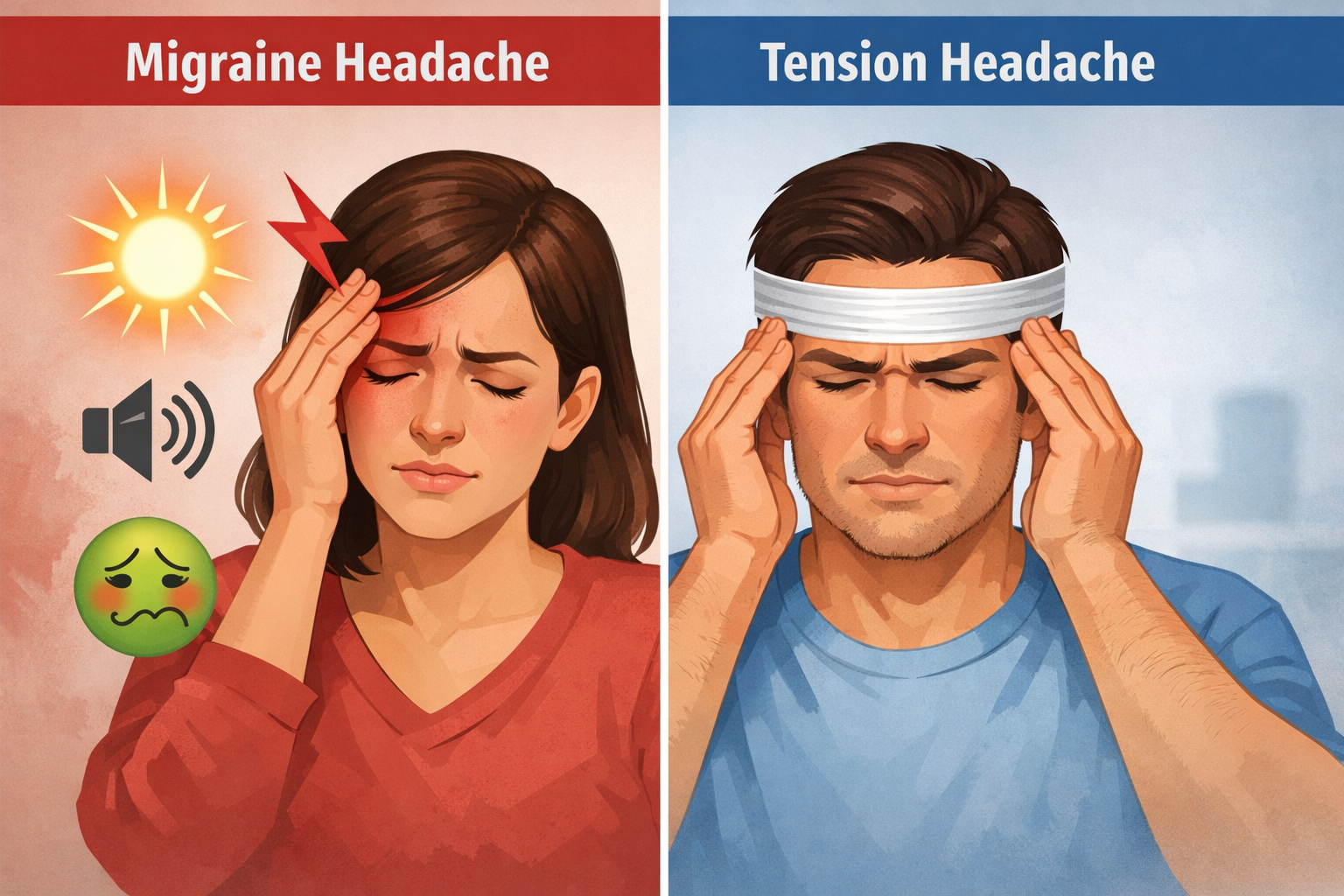
A migraine is more than just a bad headache. It usually makes the head hurt in a throbbing way, usually on one side. The pain can be mild to severe and last for hours or even days. A lot of people who get migraines also feel sick, throw up, and become very sensitive to loud sounds and bright light. When you have a migraine, things you do every day, like walking, working, or using the phone, can be very painful. Before the pain starts, some people also see flashing lights or feel dizzy.
A tension headache, on the other hand, feels very different. The pain is usually steady and dull, not throbbing. A lot of people say it feels like a tight band or pressure around their head, especially on the forehead or back of the head. Tension headaches usually hurt both sides of the head. They don’t usually make you feel sick, throw up, or be very sensitive to light and sound like migraines do. The pain is usually mild to moderate and can be caused by stress, bad posture, eye strain, or not getting enough sleep.
If you have a headache that makes you feel sick, is sensitive to light or sound, and hurts on one side of your head, it’s more likely to be a migraine. If you only feel tight pressure and no other symptoms, you probably have a tension headache.
Knowing these differences can help you pick the right treatment and make your life better. Always talk to a doctor if you have headaches that happen often or are very bad.