

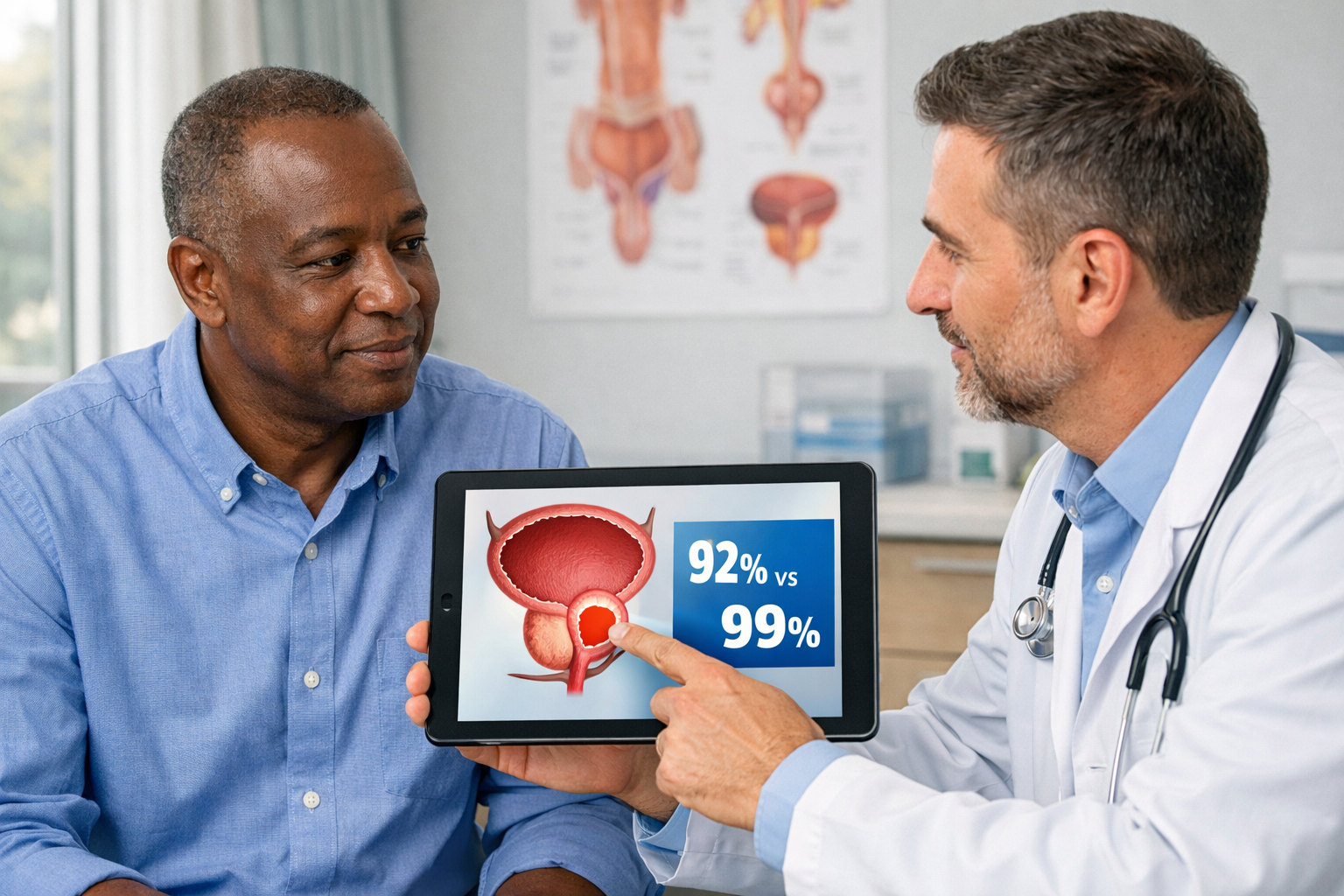
A lot of men feel scared and confused when their prostate cancer comes back after radiation therapy. They might be wondering what the next best thing to do is. Should they have surgery? Is there another choice, though? New research gives us good news. It shows that focal (targeted) treatment for prostate cancer that comes back had a 10-year cancer survival rate that was almost the same as surgery’s: 92% compared to 99%.
This means that men now have more than one good choice if their prostate cancer comes back after radiation.
What You Need to Know About Recurrent Prostate Cancer After Radiation
Radiation therapy is a common way to treat prostate cancer. It kills cancer cells in the prostate with high-energy rays. It works very well for a lot of men. But sometimes, prostate cancer can come back. This is known as recurrent prostate cancer.
When cancer comes back after radiation, it is harder to treat. Many people have thought that salvage radical prostatectomy, which is surgery to remove the prostate, is the best option. This surgery takes out the entire prostate gland in the hopes of stopping the cancer.
While surgery can be very effective, it may also carry higher risks of side effects. These can include problems like erectile dysfunction, leaking urine, and other issues. Radiation alters the tissue surrounding the prostate, rendering subsequent surgery more challenging than initial treatment surgery.
This is why doctors have been looking into other ways to treat cancer that might work better and cause fewer side effects.
Focal (Targeted) Therapy: A Less Invasive Choice That Works Well
Focal therapy is a newer, more focused way to treat prostate cancer. Doctors only treat the area where the cancer has come back instead of taking out the whole prostate. Cryotherapy (freezing the cancer), high-intensity focused ultrasound (HIFU), or other exact methods can be used to do this.
The main goal of focal therapy is to kill the cancer while keeping as much healthy prostate tissue as possible.
The good news is that studies show that focal treatment had a 92% 10-year cancer-specific survival rate, while surgery had a 99% survival rate. Surgery still has a little higher survival rate, but the difference isn’t very big. Both treatments have a very good chance of helping people with prostate cancer live a long time.
This information gives a lot of men power. It means that if prostate cancer comes back after radiation, they might not need major surgery right away. Focal therapy may be a good middle ground between strong cancer control and fewer side effects.
Of course, not all patients are the same. Age, overall health, stage of cancer, PSA levels, and personal choice all play a role in determining the best treatment. A urologist or cancer specialist will help you choose the best course of action.
There is real hope if prostate cancer comes back after radiation therapy. Both surgery and focal therapy have high 10-year survival rates. Men now have more choices than ever before. Focal treatment has a 92% survival rate, while surgery has a 99% survival rate.
Key things are finding it early, keeping an eye on your PSA levels, and talking openly with your doctor. New treatments for prostate cancer keep getting better, which leads to better outcomes and a better quality of life.