

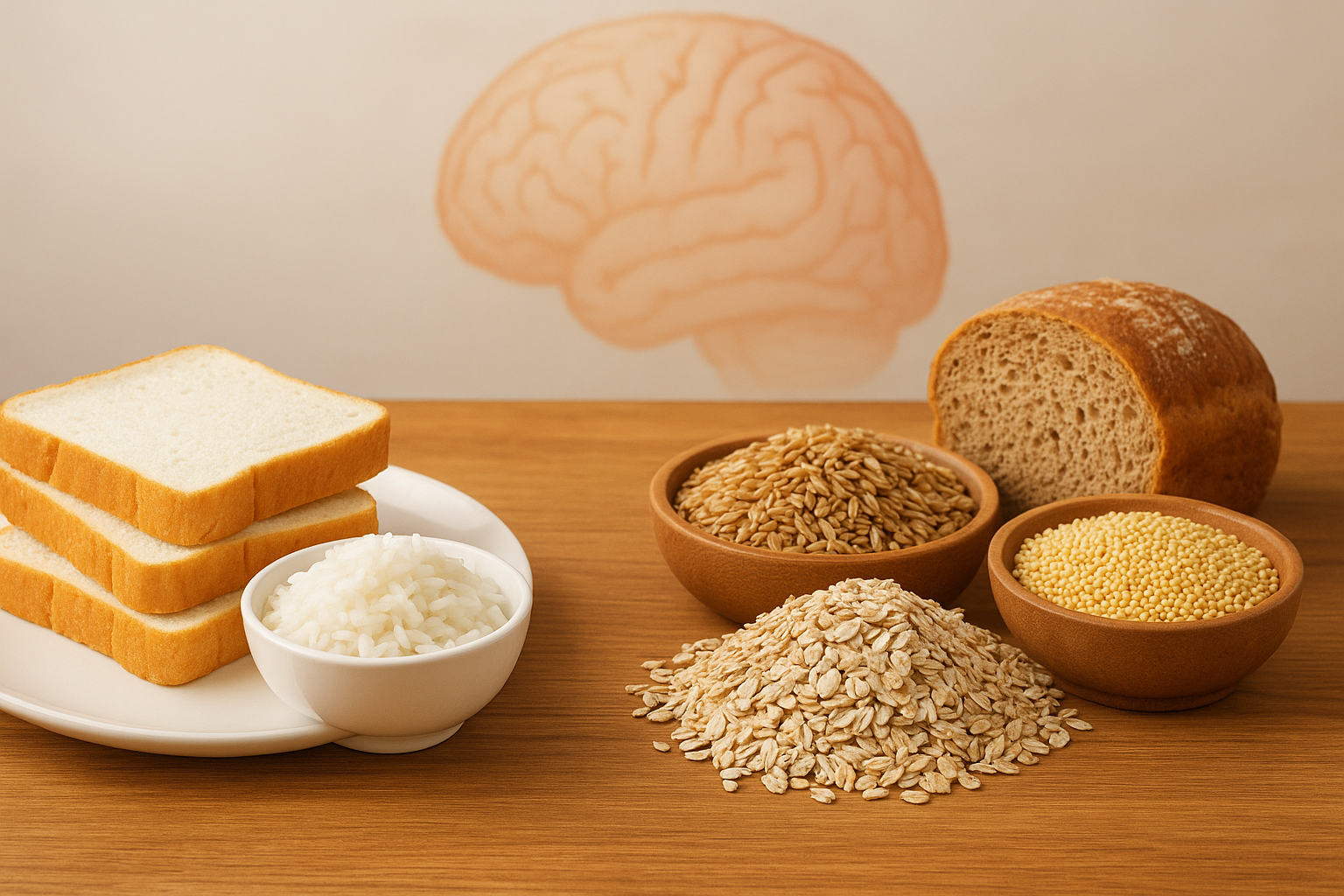
Why Switching to Whole Grains Can Protect Your Brain
People like white rice and white bread because they are soft, cook quickly, and are easy to find. But eating these foods too often could make you more likely to get Alzheimer’s disease. Alzheimer’s is a brain disease that changes how you think, remember things, and act. New studies show that foods made from refined grains can make blood sugar levels rise quickly, which may hurt brain health over time.
Grains that have had their fiber and nutrients taken out are used to make white bread, white rice, pastries, and many packaged snacks. This makes them easy to digest. When the body breaks them down quickly, blood sugar levels go up a lot. Two major causes of Alzheimer’s disease are high blood sugar, which can hurt blood vessels and cause inflammation. The brain needs a steady supply of energy to work well, and sugar spikes can make this harder.
How Refined Carbs Affect the Brain
Refined carbs, such as those in white bread and white rice, are almost like sugar in the body. They give you energy quickly, but you get hungry again soon after. This cycle can make the body less sensitive to insulin, the hormone that keeps blood sugar levels stable, over time. Not being able to control insulin well can change how the brain uses energy, which may make memory loss happen faster.
Studies have also shown that diets high in refined carbs may make the brain more inflamed. Inflammation can hurt brain cells and make it harder for you to think clearly, learn, and remember things. This is why experts tell people to choose whole grains instead, like brown rice, whole wheat bread, oats, and millet. These foods take a long time to digest, keep blood sugar levels stable, and protect the brain.
Small changes you make today can have a big effect on the health of your brain in the future. Choosing whole foods instead of processed foods is a simple but powerful way to lower your risk of getting Alzheimer’s disease.