

How Long-Term Depression Raises Cortisol and Affects Memory
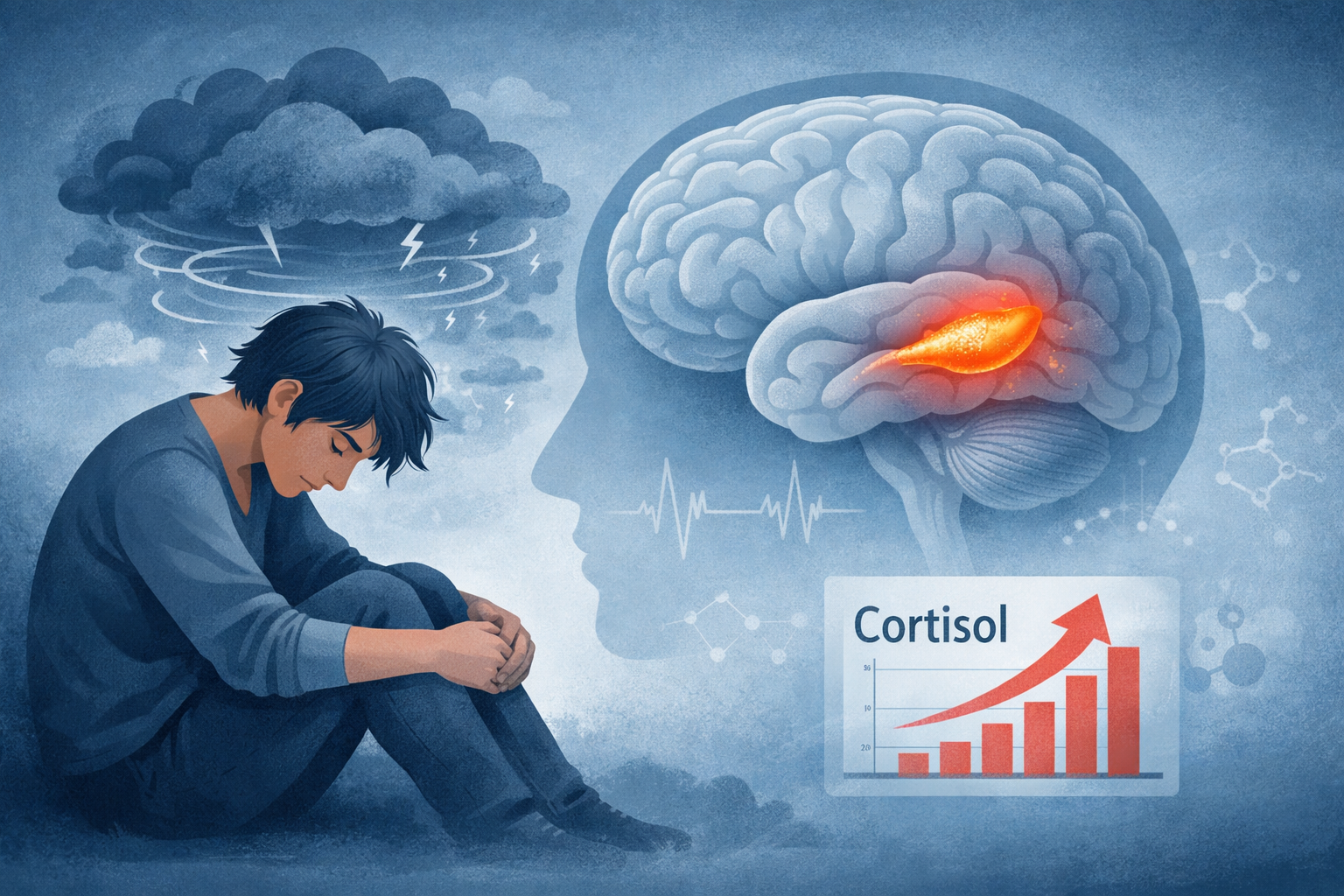
Being depressed isn’t just feeling sad for a few days. When depression lasts for a long time, it can change a lot of things in the body, like the brain and hormones. Major Depressive Disorder is what doctors call long-term depression. Studies have found that people who have long-term depression may have more of the stress hormone Cortisol in their bodies. Over time, this can even change the size and function of the Hippocampus, a part of the brain that helps with learning and memory.
People are more likely to take depression seriously and get help sooner if they know how it affects the body.
How Depression Makes Stress Hormones Higher
When someone is under stress, their body releases hormones that help them deal with danger. Cortisol is one of the most important hormones that cause stress. Cortisol is helpful in small amounts because it helps keep blood pressure, energy levels, and the body’s response to stress in check.
But people who have been depressed for a long time usually have high cortisol levels all the time. This happens because depression can mess up a part of the body called the Hypothalamic-Pituitary-Adrenal (HPA) Axis, which controls how stress hormones are released.
When the HPA axis is too active, the body keeps making cortisol even when there isn’t an immediate threat. This means that the body is always in “stress mode.”
Having high cortisol levels for a long time can lead to a number of health issues, such as:
- Not being able to sleep
- Tiredness and low energy
- Immune system that isn’t as strong
- Changes in weight
- Trouble focusing
A lot of people who have chronic depression say they feel tired both mentally and physically. This is partly because their bodies are always dealing with high levels of stress hormones.
Doctors think that this hormonal imbalance is also a reason why depression can last for months or even years if it isn’t treated right.
How Long-Term Depression Can Affect the Brain and Memory
One of the most surprising things that research has found is that long-term depression may change the way the brain is built.
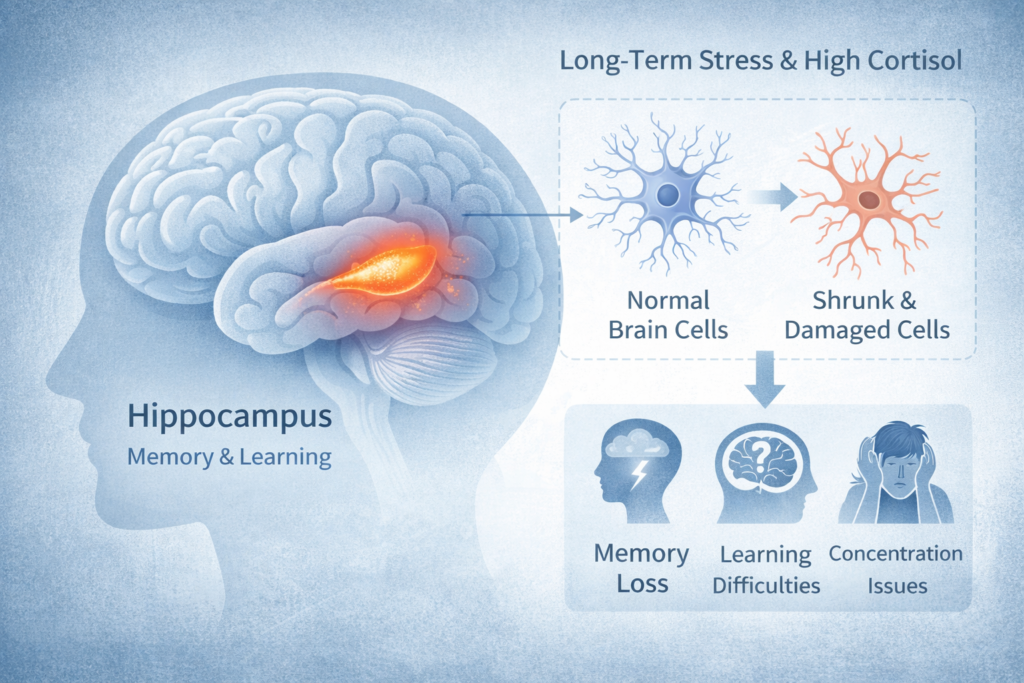
The hippocampus is a small but very important part of the brain. It aids in memory formation, acquisition of new information, and emotional processing. Studies have shown that people who have been depressed for a long time may have a smaller hippocampus than people who are not depressed.
Researchers think this could happen because too much cortisol can hurt brain cells over time. Cortisol levels that stay high for a long time can slow down the growth of new brain cells and even make some cells smaller.
This could be why a lot of people with depression have symptoms like:
- Not remembering things
- Hard time picking up new things
- Can’t focus
- “Fog” in the mind
The good news is that the brain can change a lot. The brain can heal if it gets the right care. Therapy, regular exercise, getting enough sleep, and some medications may help lower cortisol levels and keep the brain healthy.
Reading, learning new skills, and spending time with other people are all activities that can help boost memory and mood.
Long-term depression is more than just an emotional battle. It can also change hormones, the structure of the brain, and general health. Chronic depression can raise cortisol levels, which can hurt the hippocampus and make it hard to remember things and learn new things.
The good news is that there is help for depression. Counseling, lifestyle changes, and medical help can all lower stress hormones and help protect the brain if they are done early.
Knowing how depression really affects the body helps get rid of the stigma and reminds people that mental health is just as important as physical health. Getting help early can help keep both the mind and the brain safe.