

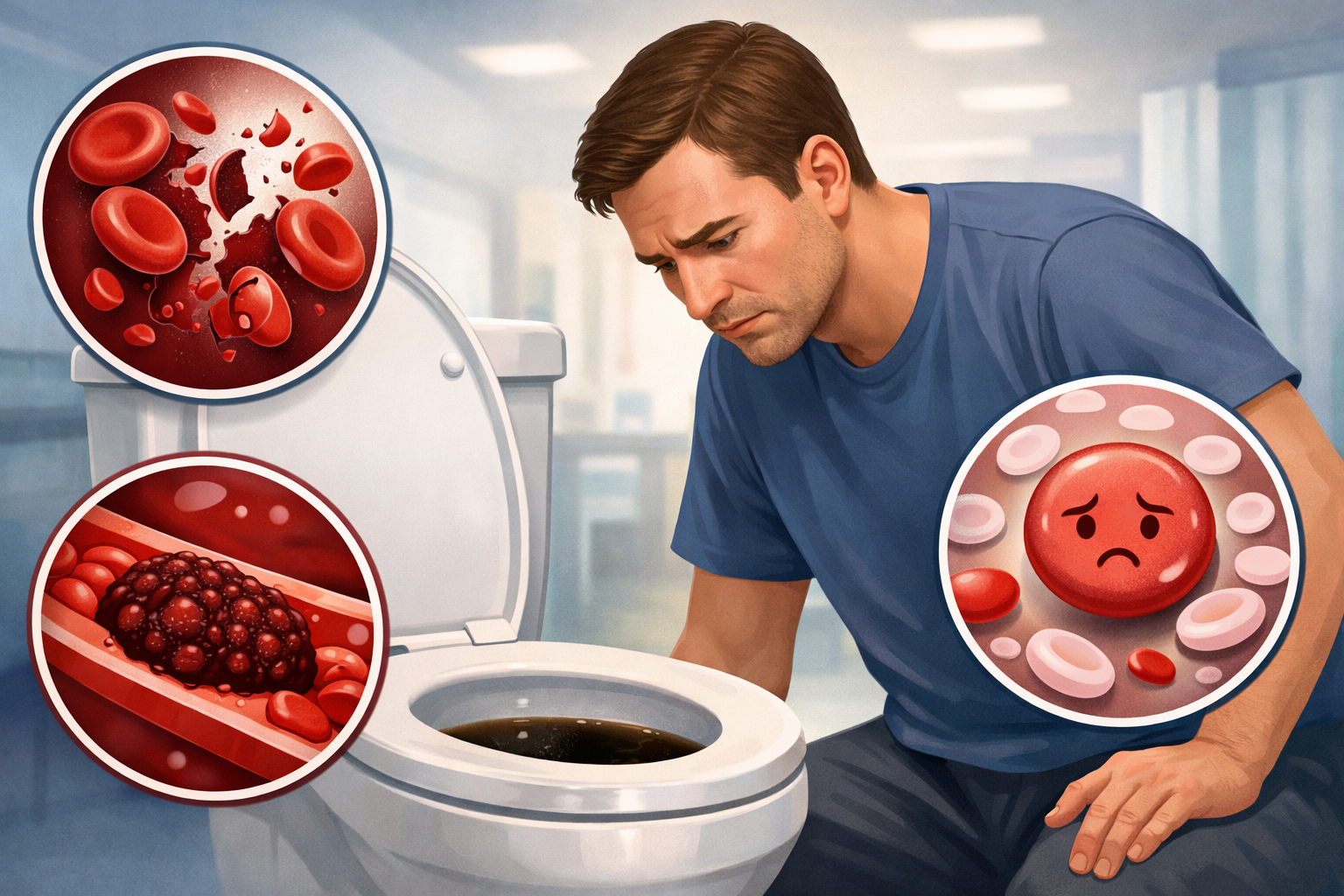
Dark urine and blood clots that don’t make sense are signs of a rare blood disease.
Many people have never heard of Paroxysmal Nocturnal Hemoglobinuria (PNH), a rare blood disease. If you don’t pay attention to the symptoms, they can be very serious and even deadly. PNH happens when the body’s immune system attacks red blood cells by mistake, which makes them break apart too soon. This causes a number of warning signs that should never be ignored.
Dark-colored urine, especially in the morning, is one of the most common signs of PNH. This happens because red blood cells that are hurt release hemoglobin into the urine. A lot of people might think this is dehydration or a urinary tract infection, but dark urine that doesn’t go away needs to be looked at by a doctor.
Unexplained blood clots are another big warning sign. People with PNH are more likely to get clots in strange places like the brain, liver, or abdomen. If not treated quickly, these clots can cause a lot of pain, swelling, headaches, or even death.
Anemia that comes on suddenly or for no reason is also a major sign. The body doesn’t have enough healthy red blood cells to carry oxygen when it has anemia. This can make you feel tired, out of breath, dizzy, have pale skin, and have a fast heartbeat. Anemia can happen quickly and get worse in people with PNH.
Why Early Diagnosis of PNH is Important
Finding PNH early can save lives. People often think the symptoms are caused by something else, like malaria, kidney problems, or a lack of iron, because the disease is so rare. Doctors can find PNH early with simple blood tests. Many patients can live longer and better lives thanks to modern treatments.
Do not ignore dark urine, repeated blood clots, or anemia that you can’t explain. Getting to the doctor early can make a big difference. The first step in fighting rare diseases like PNH is to be aware of them.