


New H3N2 K Flu Strain May Partly Escape Current Flu Vaccine Protection
Millions of people get the flu shot every year to keep themselves from getting the flu. The vaccine is meant to teach the immune system how to find and fight some flu viruses. But flu viruses change very quickly. This means that some new strains can sometimes get around the protection that the vaccine gives.
A recent study suggests that the current flu vaccine may not work as well against the new H3N2 K strain of the virus. This doesn’t mean that the flu shot doesn’t work, but it does show how hard it is to get rid of flu viruses and why vaccines need to be updated often.
Why the H3N2 K Strain Flu Shot Might Not Work as Well
The flu vaccine works by giving the body small pieces of the virus so that the immune system can learn how to fight it. Later, when the real virus gets into the body, the immune system knows it’s there and attacks right away.
But flu viruses are very good at changing. Scientists call this process “mutation” or “antigenic drift.” The immune system can see the virus’s outer proteins, which change slightly.
The new H3N2 K strain seems to have changed enough that the antibodies in the current flu shot might not be able to recognize it as well. This means that the immune system might not respond as quickly, which makes it easier for the virus to infect cells.
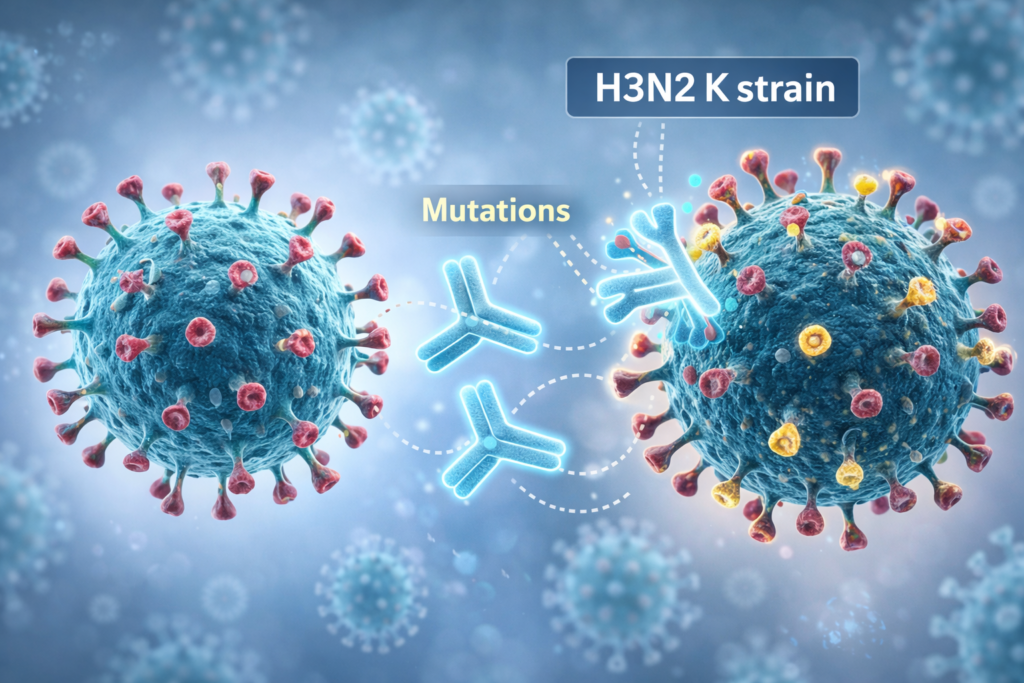
This kind of “immune escape” doesn’t mean the vaccine doesn’t work at all. People who have been vaccinated may still get sick, but their symptoms may be less severe. They might also get better faster and have a lower chance of getting serious problems like pneumonia or needing to go to the hospital.
In the past, it has been harder to control H3N2 flu viruses with vaccines than other types of flu. Scientists think this is because the virus changes quickly and sometimes grows differently when vaccines are made.
Why It’s Still Important to Get the Flu Shot
Health experts still say you should get the flu shot, even though it doesn’t work as well against some strains. The vaccine usually works against more than one strain of the flu at the same time.
So, even though the vaccine may not protect against the H3N2 K strain, it can still protect against other flu viruses that are going around. This can help keep people in the community from getting sick.
Getting a flu shot also helps keep people who are more likely to get sick, like older adults, pregnant women, young children, and people with long-term health problems, safe. These groups are more likely to have serious flu problems.
Another big benefit is that it stops the virus from spreading. The virus has less chance to spread and change when fewer people get sick.
Scientists keep an eye on flu viruses all over the world through surveillance programs. If a new strain becomes common, vaccine makers can make future flu shots more effective against the viruses that are spreading.
In the meantime, there are other easy things you can do to lower your risk of getting the flu. You can help by washing your hands often, staying home when you’re sick, wearing a mask in crowded places, and keeping your immune system strong by getting enough sleep and eating well.
Flu viruses change all the time, which means that new strains like the H3N2 K strain can sometimes get around the immunity that current vaccines give. It’s not uncommon for studies in the field of influenza research to show weaker protection.
But the flu shot is still one of the best ways to avoid getting sick, having problems, and going to the hospital during flu season. Vaccination can make a big difference in how bad the infection gets, even if it doesn’t work perfectly.
As scientists keep an eye on new strains and make vaccines better, staying up to date and getting vaccinated is still an important way to protect public health.